
 |
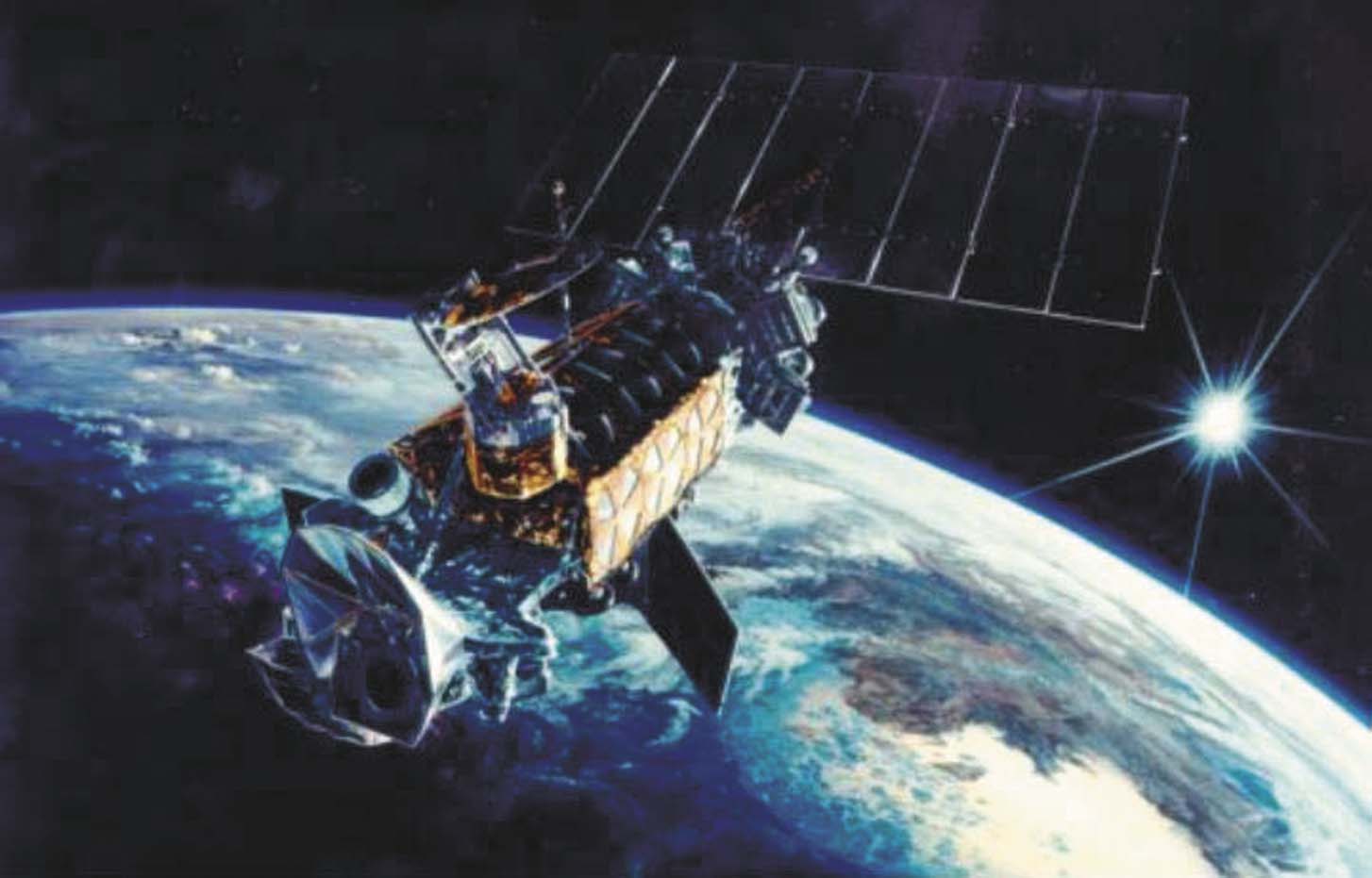
| US Air Force artist’s concept of DMSP |
A US Air Force meteorological satellite exploded in February—possibly due to a NiCad battery exploding—adding some 100 trackable bits of debris to the growing space junk problem.
Although they spread out a lot due to the satellite's polar orbit, the orbital altitude of about 800 kilometres is more than double that of the International Space Station. The ISS moves between about 330 and 430 kilometres, as it is subjected to atmospheric drag and requires periodic boosting by the attached Soyuz capsule. The Chinese space station Tiangong-1 is at a similar altitude and the Hubble Space Telescope is around 560 kilometres (unlike how it is depicted in the movie Gravity). Geosynchronous satellites are way out at about 36,000 kilometres.
A British research team has been modelling this latest debris cloud and determine increased risk to a number of US and Russian assets in particular. And this new debris will remain a problem, as it is above the atmospheric drag zone, so will stay put.
Unless we get serious about doing something about the space junk problem. According to NASA, there are about 19,000 pieces of debris larger than five centimetres that are tracked, with some 300,000 pieces larger than one centimetre estimated below 2000 kilometres.
 |
| Space debris seen from outside geosynchronous orbit |
No comments:
Post a Comment
Please share, "Like", or comment on this post. Feedback is fuel for the blogger!