Another catch-up of my readings via various sites and social media forums, for anyone interested (but mainly just for my own record), through the Paper.li automatic magazine tool.
There's something in here for everyone...
Week to 26 November
Week to 19 November
Week to 12 November
Week to 5 November
Week to 29 October
Week to 22 October
Week to 15 October
Showing posts with label Energy. Show all posts
27 November 2012
7 July 2012
Crying over spilt light - a lament about light pollution
| A beautiful view of the Milky Way at Wilsons Promontory Alex Cherney www.terrastro.com |
A reader of my complaints about Canberra's chronic light pollution wrote to me with a poem she wrote about exactly that.
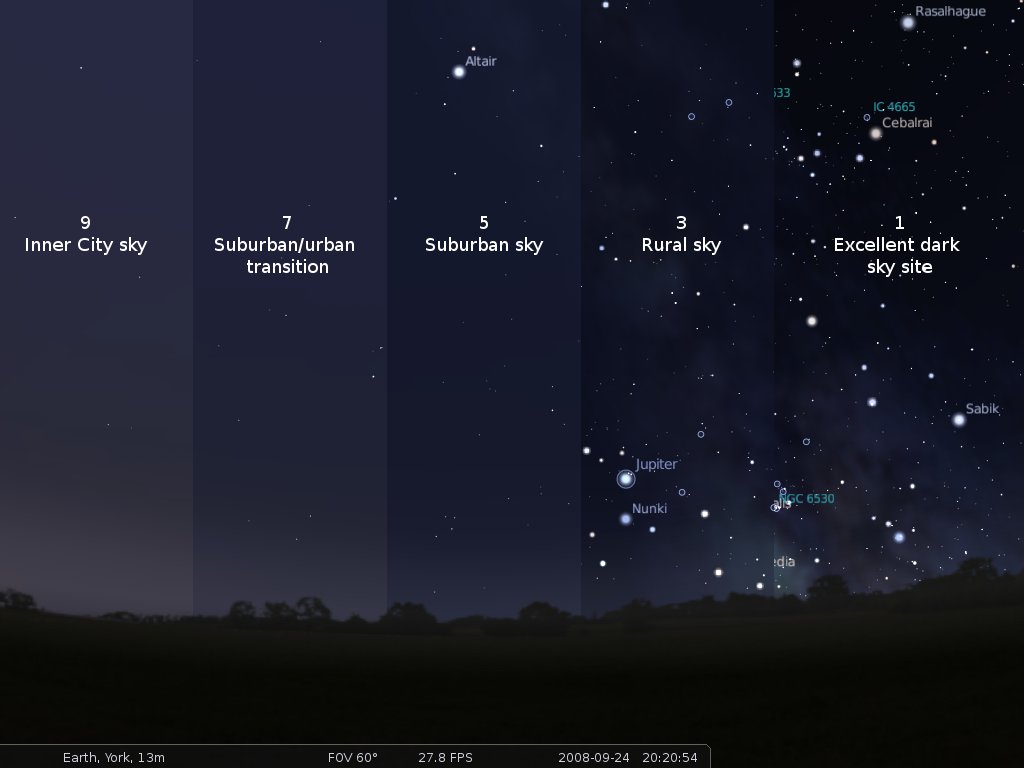
Penelope Cottier points out that about one-fifth of the world's population can no longer detect the Milky Way with the naked eye due to light pollution. (Reported in Cosmos magazine, August/September 2009.)
| Light pollution simulation http://stellarium.org/features_in_0.10.0.php |
Crying over spilt light
Obesity of light blankets black,
clogs the arteries of recognition.
Blindness comes from the stroke
of too easy ignition; the fatty candle
of conjoined cities chokes imagination.
No matter; search the lost skies
by screen's unblinking gaze,
and rediscover what Neanderthals
once mind-wandered quite for free.
Erasure of night by carrion globe,
pecking out eyes of speculation.
- P.S. Cottier
First published in The Specusphere
You can read more of Penelope's writings on her blog.
15 February 2012
CSIRO builds a strawbale house and torches it...
The CSIRO put strawbale building to the bushfire test today. It took a licking but it's still ticking!
First they had Joost build their structure - strawbale walls with steel frame:
6 February 2012
From cherry-picking denialists to space games and squealing sheilas: weekly wrap of The Beach House
What I've been reading and writing about for the week to 5th of February, all in a neat little magazine for you.
Labels:
ACT Government,
Canberra,
Energy,
Entertainment,
Federal Government,
History,
Media,
Science,
Society,
Space,
Sport,
Sustainability
25 January 2012
From science teaching to space toilets and lots in between - what I've been reading this last week
The Beach House weekly news summary, with some of what I've been reading and writing about over the week to 21 January. Recap, enjoy, grimace wryly, as appropriate.
Labels:
ACT Government,
Canberra,
Education,
Energy,
Entertainment,
Environment,
Federal Government,
Health,
Humour,
Internet,
IT,
Media,
Science,
Society,
Space,
Weather,
World
15 January 2012
Another major Canberra eco-product retailer has fallen...
How do businesses fail in booming markets?
But the firm went into administration last week, with debts of $750,000. Other major players have also fallen - such as the national firm Solar Shop. Many of those debts will be individual homeowners and they will be hurt badly, and will retain ill-will towards the renewables industry as a result. Solar Shop also owed thousands to the Gungahlin Community Council following a very successful group buying project run by GCC.
20 November 2011
To mimic chlorophyll - surely the holy grail of solar energy research?
Discovery of a new type of chlorophyll has many people excited at the prospect of being able to produce artificial systems to replicate the way natural systems convert the power of the sun into power for people.
One of the researchers at the forefront of this work is Dr Min Chen, right here in Canberra at the Australian National University.
17 April 2011
Greens bill is good news for renters
Crispin Hull is on the money with why Shane Rattenbury's draft bill on better housing for renters is a good thing:
Tenants suffer as market fails on energy
Posted: 08 Apr 2011 11:11 PM PDT
HERE we go again: another slug on landlords in addition to ever-increasing land taxes, stamp duty, development fees, planning rules, environmental-efficiency ratings, tree-protection orders, verge-protection plans and the list goes on, I can hear the property owners wail.
The wail this week it was the Greens plan to force landlords to pay for housing upgrades to meet energy-efficiency ratings and to provide deadlocks on all doors to improve tenants’ security.
Small wonder, they say, rents are so high. If government were serious about housing affordability for buyers and renters it would remove all these taxes, charges and red tape and let the market sort it out.
The landlords, real estate agents and property investors have a point, up to a point. But so do the planners and environmentalists.
Over the past 20 years or so, the property sector has squealed at every change to the building code that has mandated more energy-efficient dwellings. Every time, they have pleaded that the new rules would make dwellings less affordable. Every time, they have pleaded that the market should dictate change.
21 July 2010
Google going for carbon neutrality
Google has just signed a 20-year deal to buy all of the renewable energy generated by a 114 megawatt wind farm in Iowa.
On top of them building one of the largest corporate solar power farms, building energy efficient server farms, and purchasing offsets for everything else, Google really is putting their money where their mouth is.
9 July 2010
Electric, and oh so sexy...
What else can you say but...WOW!
Since when does a Renault look so filthy gorgeous? Since when does an electric car look so filthy fast?
Yes the Tesla is pretty neat, but it has always been battery job wedged into a Lotus Elise.
This is a ground-up new design, kevlar shell, with top speed of 180kph, and amazingly an 80% charge in just 20 minutes.
You've got to love the direction cars are finally moving towards.
Source: dVice.
8 July 2010
Green Loans Scheme - how not to run a grant scheme
The independent review of the Federal Government's Green Loans Scheme has been tabled and it is scathing of the department's handling of the procurements and processing.
The PDF file is set up to prevent simple copying of the text, so nothing is reproduced here.
But just go straight to the Executive Summary, and be amazed.
What is so disappointing is that - like the insulation scheme - this was a well intentioned program that should have resulted in many big gains for sustainable housing.
Instead we have the reputation of environmental initiatives severely damaged through poor management.
Heads should roll.
4 July 2010
HIA exaggerating again on camapign against star ratings
More outrageous claims from the HIA about mandatory energy ratings in the Canberra Times.
Are we really expected to believe that the move from a 5 to 6 star minimum would add another $100,000 to an average $400,000 home build?
The HIA has opposed every single energy efficiency initiative around Australia for years. In 1999, they damned Queensland's first 3.5 star minimum as imposed by Maroochy Shire Council when I was a Councillor there, outraged that it would make it virtually mandatory that ceilings were insulated. In Queensland!
2 May 2010
A zero emissions house?
CSIRO, together with developers, have opened an 8-star home they claim will produce zero net emissions in Doreen, near Melbourne. Perhaps the rating could have been even higher had the designers provided some shading over those windows??
Featuring largely off-the-shelf materials, the home also has a state-of-the-art computerised management system.
No doubt having a six kilowatt photovoltaic power generation system on the roof would help off-set the day-to-day operational emissions - that's four times the 'standard' rooftop 1.5KW system size.
CSIRO will monitor a family living in the home for a year.
They say that 13% of Australian emissions come from household energy consumption, so building better homes is a most worthy pursuit.
20 March 2010
Insulation scheme questions need to go much deeper
Few people would not be aware of the farce that has become of the Federal Government’s home insulation scheme.
But not many would realise that it has seen the insulation of some 1.1 million homes, which is no small achievement, irrespective of a few hundred dodgy installations by a few rogue operators.
According to the Sydney Morning Herald, the Total Environment Centre says that the scheme’s success equates to more than 15 million tonnes of CO2 emissions abated over 10 years, or the equivalent of taking 300,000 cars off the road. These are not figures to be sneezed at. If DEWHA had not screwed up the fine details of the scheme, allowing the Dodgy Brothers to get in on the action, everyone from Peter Garrett to Kevin Rudd would be crowing about the scheme’s success, and justifiably so.
It’s been hard to watch one of the best things that has happened in the sustainable housing field for decades become the target of such scorn, and like the media and Opposition, it has been hard not to start pointing fingers…just in some different directions and for different reasons from the mainstream blame game.
18 March 2010
Simple solution for 3rd world greenhouse
Researchers the world over are looking for 'magic pill' solutions to climate change. Sometimes the simplest solutions are right under their noses...
Science Alert reports that a Phillipino engineer Alexis Belonio and US physicist Steve Garrett have combined efforts to develop a simple inexpensive little cooker that uses waste biomass such as rice husks to produce a clean burn.
This in turn would do away with many millions of polluting cookers and open fires that are a major source of "black carbon". This is the soot from fires and fuels that goes into the atmosphere and is some 600-700 times as damaging as CO2, because the dark colour aids heat absorption.
The kicker is that black carbon only persists inn the atmosphere for around 10 days. So real reductions in warming could be seen very quickly after rolling out the cookers to impoverished areas.
Then there's the reduced indoor air pollution, reduced expense of other fuels like kerosene or gas, and so the benefits roll on.
10 March 2010
H2O + Sun + Au = plenty of H for fuel cells
Fuel cells are the future of distributed energy production and engines in vehicles, of this there is no doubt.
They take a molecule with hydrogen in it, split it up to produce plain hydrogen, which then powers the fuel cell to produce electricity.
Problem is that while the most abundant source of hydrogen is water, it's required more energy in the splitting process than is produced by the fuel cell. So most research to date has been on extracting hydrogen from hydrocarbons - oils. And that's kind of self-defeating isn't it?
Far better if scientists can derive a way to split water, and better still if it can be efficiently powered by that other uber-abundant energy source - the sun - right? And that's just what they've now done.
2 February 2010
Blinded by nuclear science
Letter to the editor to Canberra Times:
Professor Leslie Kemeny (“Emission and population targets impossible without nuclear power”, Canberra Times, 1/2/10) takes a typical engineer’s attitude to issues – the solutions to big problems have to be big solutions.
But greenhouse emissions are largely a result of the cumulative impacts of many millions of decisions taken by individuals and organisation. And as incremental decisions have caused the problem, so can incremental actions work to reverse it.
Everyone can choose to say no to the spectre of nuclear power stations and radioactive waste dumps by choosing to improve their own ways of going about their daily lives. From small things like the method of their daily commute to big things like their new home design or installing rooftop solar panels.
Most people would recognise this approach as ‘demand management’. But engineers only make money from designing great big projects, so we shouldn’t be surprised that demand management doesn’t get a look in from Professor Kemeny and his profession.
As for population, the professor should have a better understanding of the difference between a ‘target’ and a ‘projection’. I don’t believe Kevin Rudd proposed 35 million as a 2050 ‘target’ population. As a projection, again it remains something that we can all choose to reject, and to do something about.
18 January 2010
China does environment big
China may be copping it for derailing Copenhagen, but you can't deny they are already doing plenty of good things.
There's the world's largest solar-powered office building
The world's largest high speed railway, with an 1100km link just opened with average speeds of 350km/hr! And they plan to complete 18,000kms by 2012!
Then there is the world's largest solar power farm to start this year and be completed by 2019, to generate an amazing 2000 MW.
Not talking about it - doing it.
Not certain yet is this stunning plan for a 70-floor forest-office tower.
Could there actually be the vision and sensibility out there to build like this in cities?
What about in our cities??
14 December 2009
Ric Butt is wrong
The latest issue of the wonderful sustainable housing magazine Sanctuary unfortunately perpetuated the erroneous advice that Ric Butt and his firm Strine Architects are in the habit of giving out about window design, as mentioned in this previous article about window selection.
Concerned that such advice may go uncorrected, I wrote to Sanctuary:
17 November 2009
Queensland's Sustainable Housing Declaration a poor solution
The Queensland Government has brought out a checklist that will be required of anyone looking to sell their home.
A checklist? Whoopy chook. There have been far better tools developed that the Qld Gov't could be using. The Sustainable Housing Code that was being drafted by Brisbane City Council's greenhouse team (on which I played a small part) on behalf of all the SEQROC councils was to provide a score for each key aspect of a house's makeup. The overall score would provide a better snapshot of the house, and even out aspects that the individual layout or orientation and environmental factors may not allow.
However, I also have little regard for the REIQ's Jean Hamer complaining about the cost of the scheme - no surprise there. There has been a constant stream of doomsaying from the development industry for decades. I recall attending a presentation by the so called "Environmental Advisor" of the HIA to their members in the late 1990s, in which he decried the absurd impost by the proposed Maroochy Plan 2000 that would require a minimum 3.5 star rating, and would force builders into the unnecessary measure of putting ceiling insulation into every new home they built.
Subscribe to:
Posts (Atom)