Showing posts with label Space. Show all posts

9 April 2016

Launch Alert - SpaceX taking Bigelow testbed to ISS

Bigelow Expandable Activity Module


LAUNCH ALERT

Only a few minutes until #SpaceX launch their next Dragon 9 rocket to the International Space Station #ISS, with the launch scheduled for 1643 Miami time, or 2043 UTC, 0643 AEST.

Watch live on http://www.spacex.com/webcast.
Alternative: www.nasa.gov/ntv

This launch is particularly interesting for two reasons:

File photo of SpaceX's rocket landing platform. Credit: SpaceX
SpaceX robotic landing barge
1/ SpaceX will attempt another landing of the reusable first stage on their robotic landing barge. They've successfully landed a first stage on solid ground, back at the launch pad it took off from. But so far success has eluded them for barge landings. The barge is important because it doesn't require the first stage to essentially turn around and double back to the landing pad - something that requires a lot more fuel.

22 July 2015

The Moon/Venus/Jupiter conjunction as no-one on Earth saw it


Recently there was a conjunction of the crescent Moon, Venus (also in crescent phase) and Jupiter.

It was captured by US Astronaut Scott Kelly, currently Commander of the International Space Station, with another planet added in—Earth!


It's rare for photos from the ISS to also feature the starfield background. There is just so much ambient light from Earth that it drowns out the fainter stars for photos. Unless you take one photo exposed for the Earth and another exposed for the stars, and combine them in Photoshop. But even then it's very hard not to have the Earth blowing out the stars where they are very close to each other.

NASA has been know to add in the relevant starfield from a completely different shot. And there's nothing wrong with that—our eyes see a much broader range of light than a camera can capture in one shot. So it's just using tools available to more closely represent what the astronauts themselves are actually seeing.

Which all makes the timing on this shot all the more wonderful to have achieved. But then, he is orbiting Earth every 79 minutes, so he probably had a few chances to get it right!

Kelly is well worth following on Twitter—he posts some great material from his unique perspective. Such as:

29 June 2015

SpaceX Falcon/Dragon launch explodes right before Stage 2 ignition

It seemed like another perfect launch for SpaceX.


They had not had any launch failures since their development stage. 18 successful commercial launches.

(Failures to land the Falcon first stage back on their remotely-controlled landing barge of course don't count, as they are highly experimental phases, and the primary roles of the launches did not depend on them.)

But just moments before MECO—Main Engine Cut-Off—and firing of the second stage, the craft exploded. Exploded so comprehensively that there seemed virtually nothing left to fall into the Atlantic Ocean.

Watch the launch, and at 3:15 the failure:


Another angle, with the "anomaly" occurring at 2:45:


28 June 2015

SpaceX to have another go at landing Falcon rocket today

SpaceX is launching another Dragon spacecraft to the International Space Station later today.

And they will be having another go at landing the first stage Falcon rocket booster on their remotely-controlled floating platform barge. (Check SpaceX owner Elon Musk's little 'in joke' written under the platform target.)

Launch times:

My time, AEST
12:21AM 12, May Tue 2015

22 June 2015

Significant chance of auroras tonight through mid-latitudes

Spaceweather.tv aurora projection

The wonderful Dr Tamitha Skov of Spaceweather.tv is reporting that we have good chances of visible auroras in the mid latitudes from tonight and through the next couple of nights.

For Australia, this means as far north as Sydney.

Click on this picture to click through to Dr Skow's full video report:


Of course you will want to try to capture such a rare event on camera. You'll need to get away from city light pollution, somewhere high with an unobstructed view to the south.

Set your camera on a fixed tripod. Put the camera in Live View mode and zoom right in on a bright object. At the moment, Venus, Jupiter and the crescent moon are all very bright in the early evening to the north-west. Set your camera focus to manual and get these targets as sharp as you possibly can. Then zoom right back out, being very careful not to touch the camera focus ring.

12 June 2015

Take a tour of dwarf planet Ceres

Enigmatic bright spots within a crater on Ceres. Photo by NASA JPL on 6 June 2015 at 4400 kilometres altitude,
Resolution 410 metres per pixel.

NASA's Dawn robot entered orbit around dwarf planet Ceres on 6 March 2015.

It's the first spacecraft to visit two distinct interplanetary bodies, after first spending 14 months studying the smaller dwarf planet Vesta in 2011 and 2012.

The Dawn mission team are currently performing mapping orbits at around 13,600 kilometres out and navigational imaging about 5100 kilometres out. Once complete, Dawn will start edging into closer orbits.

NASA has combined images from these orbits to date into this wonderful flyover video released on 8 June:


At 15 seconds in, you'll see the mysterious bright spots (see photo above) in the base of a medium-sized crater that have so intrigued people the world over since they were first imaged months ago as Dawn approached Ceres. Nasa scientists are wondering if it could be a volcano, a geyser or cryo-volcano, shiny rock (as in glassy like molten from an impact), ice or salt.

14 May 2015

Explosion makes space junk problem worse

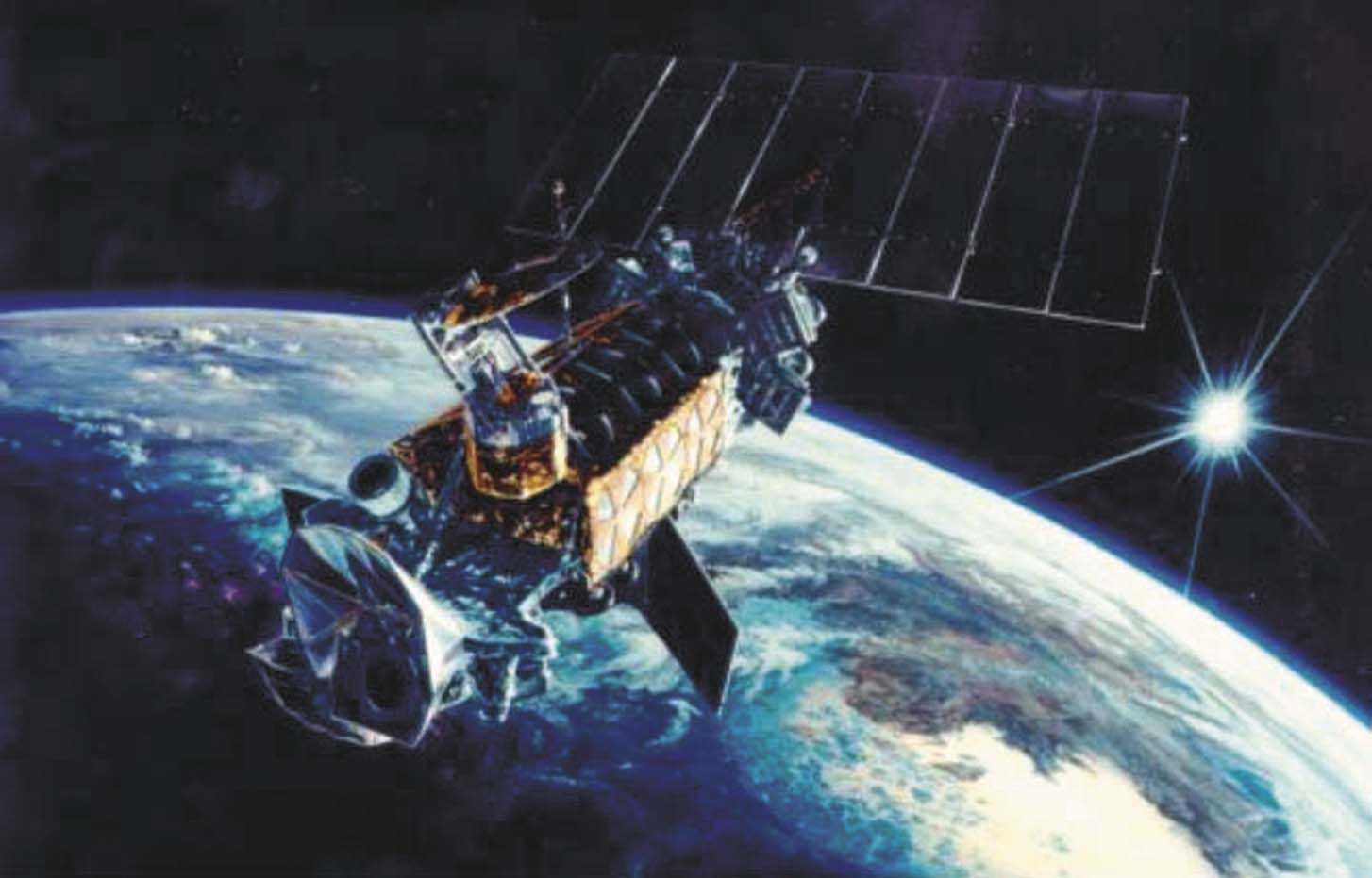
US Air Force artist’s concept of DMSP

A US Air Force meteorological satellite exploded in February—possibly due to a NiCad battery exploding—adding some 100 trackable bits of debris to the growing space junk problem.

Although they spread out a lot due to the satellite's polar orbit, the orbital altitude of about 800 kilometres is more than double that of the International Space Station. The ISS moves between about 330 and 430 kilometres, as it is subjected to atmospheric drag and requires periodic boosting by the attached Soyuz capsule. The Chinese space station Tiangong-1 is at a similar altitude and the Hubble Space Telescope is around 560 kilometres (unlike how it is depicted in the movie Gravity). Geosynchronous satellites are way out at about 36,000 kilometres.

6 February 2015

Geek out with these space and science events in Canberra


There are plenty of events coming up for Canberra space and science fans, with an inevitable clash unfortunately:

  • European Space Agency mission experts on the Rosetta Mission
  • Nobel Laureate Professor Brian Schmidt on the future of science
  • Peter Garrett on ecology and climate science
  • Anna Frebel (MIT) on the search for our galaxy's oldest stars
  • Badri Younes (NASA) on the interplanetary communications and navigation network.

All of these events are free. Descriptions and details below are as published by the various event organisers.

12 November 2014

ESA's Rosetta about to launch Comet 67P lander - watch live

Philae Lander as it will look as it departs Rosetta for the landing. Picture: European Space Agency
The European Space Agency's Rosetta mission to the Comet 67P/Churyumov-Gerasimenko is about to launch its lander known as Philae on its long slow approach to 'land' on the surface of the comet.

You can watch the separation coverage from the ESA mission control room here:


If you would like to follow the technical details more closely, there is a very good forum on NASA Spaceflight.

Rosetta was launched in March 2004, and journeyed for 10 years to rendezvous with Comet 67P in August this year. It then proceeded to photograph and map the comet in the search for a good landing site.

There's much more your can read about the mission on ESA's Rosetta website.

As I am about to post this, the Philae lander should have separated from Rosetta. We have to wait about 28 minutes before we will receive the corresponding transmission.


24 December 2013

Transit of the Sun by the International Space Station caught on camera


That might not look like much, but I've wanted to try to catch the International Space Station in flight for a looong time.

This was my very first attempt, with the added complexity of it being a transit across the face of the Sun.

The alert said the viewing opportunity was centred 130 kms away from my location. I recorded for several minutes but thought I'd missed it. Until I looked at the recording the next day!

13 October 2013

It's coming right at you!


Elon Musk has just posted this hexacopter video of a Grasshopper test to 744m, hover, divert and return to the pad. The highest flight yet for Grasshopper.

It's an incredibly stable hexacopter, with a panning camera, and at one stage it really looked like it was going to be toast!

2 July 2013

UPDATED: Whoa! Russian rocket crashes and explodes moments after lift-off today

Things have been travelling swimmingly in the field of spaceflight for a little while now, with even the Russians having a string of flawless launches, and the odd technical glitches not impeding the prime purpose of a few missions.

Until today, when this happened, just a few minutes ago:


The coverage of this launch was really dodgy, no sound, and I couldn't get it to play where I am at all. So no surprise when it dropped out bang on the launch moment, which is why the footage in this clip freezes at that point.
The Proton-M mission was to place three Glonass-M global positioning satellites into orbit, as Russia builds their own equivalent of the US GPS network.

There's a discussion thread on NASA Spaceflight that's worth a read and to check out the many screen grabs from people who were able to get the feed:

13 May 2013

Commander Hadfield does Major Tom and wins the internet today, hands down.

Commander Chris Hadfield handed over the reins to the International Space Station overnight to Pavel Vinogradov , and will be climbing into the Soyuz capsule together with Tom Marshburn and Roman Romanenko for a wild three-hour ride back to Kazakhstan later today.

Prior to his departure, he tweeted the following musical number. What else, but David Bowie's Space Oddity! And like so many of his posts, it created a social media sensation! Understandably: this was an outstanding post. Enjoy!


I found myself thinking that his singing voice was not what I expected—a lot higher pitched. But then I remembered that the ISS atmosphere is thinner than on Earth, noticably changing vocal pitches.

I do wish the one scene where he sang:
"Floating in a most peculiar way..."
was flipped 180 degrees so he was hanging from the 'ceiling'.

Nice to see towards the end that the guitar was caught just before it crashed into anything. That is going to be one incredibly valuable guitar once it's back on Planet Earth!

Hadfield's return to Earth will bring to an end what I'm sure was the most shared and publicly followed six months in ISS history. When I started following him on Twitter while he was still training for this mission, he had a few thousand followers. As he is leaving the ISS he has an amazing 777,000 followers!

10 May 2013

Holy crap! This trailer for the movie Gravity will scare the bejesus out of you...

So you've got your application in for the MarsOne one-way trip have you?

Watch this trailer for the upcoming movie Gravity, and tell me it doesn't make you pause for a moment...?

Go full-screen and turn it up!


Sandra Bullock, George Clooney, the International Space Station, October.

I can't wait. I think...

17 April 2013

This is not a movie trailer. This is a real space mission pitch.

Scientists are often accused of doing great science, but not doing very good at selling their science.

Perhaps this very cool 'trailer' is a sign things are changing around that?

It's for LISA—the Laser Interferometer Space Antenna—a European proposal to put three laser-equipped spacecraft into an Earth-trailing orbit and configured in a triangle with each side measuring one million kilometres. It uses lasers between the craft to measure separations down to picometres.

The goal? To detect that elusive phenomenon the gravity wave.


I like it!

This is how the mission purpose is described on the project website:

16 April 2013

Public stargazing this Friday night—Mount Stromlo. I'll be there. Will you?

The members of the Canberra Astronomical Society will be back up on Mount Stromlo this Friday night for the second of this year's joint ANU/CAS public stargazing nights.

After the full-cloud washout from last month, if the skies are clear this week, we expect a huge turnout. 500 people is normal, and on one pretty busy night last year, I was sure every one of 500 people checked out Saturn through our telescope...

It will be the first public outing for my new telescope and the big wide-field eyepieces I bought especially for these public viewings. I've been setting it up to control the new equatorial mount via bluetooth straight from Stellarium on a notebook PC, and using a wireless gamepad for steering. This process uses programs called ASCOM EQMOD and Stellarium Scope.

It would be nice if I could get some clear sky to actually test it first…There's one crucial component that I haven't tested yet—the sky alignment program Alignmaster. :-/

Please make sure you check the Mt Stromlo All-sky Camera before you set off, to see whether anything is visible:

Here are the details posted by ANU. Note the 'warm clothes' advice—it does get cool and windy up there! Ski jacket is my standard gear…
The Mt Stromlo Observatory in conjunction with the Canberra Astronomical Society invite the Canberra community to attend our public observing night.
Come and see the rings of Saturn, the craters of the moon as well as beautiful star clusters and nebulae. On the night attendees will be taken on a ‘tour of the universe’ with talks by astronomy experts and observations on several telescopes.
This event is free and open to the public. No bookings are required.
Warm clothing is recommended. In the event of cloudy weather, star gazing will be cancelled. You can check out the weather at Mt Stromlo using our all sky camera.

1 April 2013

The Pale Blue Dot - beautiful words, beautiful timelapses...

Take the words of Carl Sagan, some beautiful timelapses, and perfect musical accompaniment and you have a pretty compelling combination.

Try to focus on Sagan's words. They are just as important and hopeful now as when he first shared them years ago. Then share.


EARTH: The Pale Blue Dot from Michael Marantz on Vimeo.

Well done Michael Marantz!

26 March 2013

How much water really is there on Spaceship Earth?

We're told that all the water on Earth came here via comet impacts. That's a fact that's pretty hard to reconcile. I mean there's just so much water right?

Not when you look at it all balled up and sitting next to the planet...

And not when you compare it against all the liquid water in Saturn's moon Titan - not even compared to the water on Jupiter's moon Europa.

The heavy bombardment period must have been a pretty serious time to be around...


25 March 2013

What I've been reading lately

Just an archival catch-up of recent The Beach House Weekly—my Paper.li auto summaries—of an interesting few weeks in science, space and Australian politics.

From rockets to meteorites, Roxon to Rudd, novas to Nobels, planet hunters to metric hunters.

25 March 2013
18 March 2013
11 March 2013
4 March 2013
25 February 2013
18 February 2013
11 February 2013
4 February 2013
28 January 2013
21 January 2013
14 January 2013
7 January 2013
31 December 2012
24 December 2012
17 December 2012
10 December 2012

Intriguing to look back through actually. Something in there for everyone.

7 March 2013

Oh my. This puts it all in perspective wonderfully...

So just how big is the Sun?

Pretty hard to go by this gorgeous picture for summing it up in one:


Yes—those little specs right over on the left side are the four terrestrial planets.

It was done by Bob Riddle, and he has a bunch of related information over on his blog.

Via Brad Snowder (@skywise88).
On the topic of comparisons, did you know that the mass of Jupiter is some 2.4 times the combined mass of every other thing in our Solar System—excluding the Sun. Every planet, moon, ring, asteroid and dust mote. But even that pales next to the Sun. But wait: even the Sun pales next to the size of red super giant Betelguese, which is in our skies at present, in the Orion constellation. If Betelguese was where our Sun is, its surface would be right out past Jupiter's orbit (which is 5.2 Au, or 5.2 times the distance from Earth to the Sun, or 816,520,800 kilometres). Betelguese's radius varies between 950 and 1200 million kilometres. Now that's big...