
It was a night for discovering nebulae. These are wispy areas that look a bit like cloud patches. In reality they are massive dust cloud areas and are the birthplace of new stars. What we saw wasn't as startling as some of these pictures trolled from various places across the web. But we were pretty impressed, given there was a little bit of a breeze, we are limited to a 6-inch Cassegrain (Celestron NexStar 6) and an 8 inch Dobsonian (Saxon - which Jax has taken to with a marker pen to make his name instead!), and the light impact from Canberra even where we were kept it looking like it was just 30 minutes past dusk, even at 10pm.
First thing we checked out was the Orion Nebula, with this B&W image, which is brighter, but otherwise very similar to how we saw it:

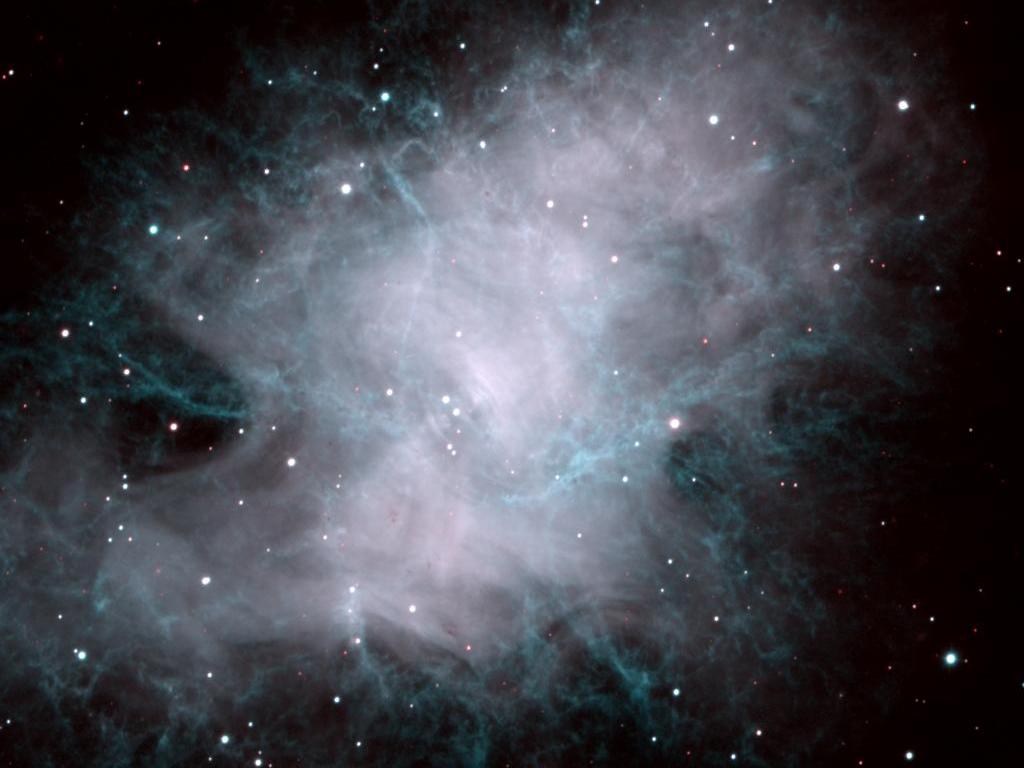
Then the Crab Nebula:

The Celestron's computerised tour seemed obsessed with the northern sky and I didn't know the names of anything in the southern sky, so just panned around with the Saxon using the 25mm lens, then shifted to the 10mm lens for anything interesting.
Between the Large and Small Magellanic Clouds (themselves smaller galaxies in the process of being swallowed by our Milky Way) I found a stunning nebula. I think it may have been the Tarantula:

This picture shows a fish-eye lens view of the Milky Way and the Large and Small Magellanic Clouds. Last night, the view to the south and south-east was as per this picture but rotated anticlockwise about 90 degrees, with the Southern Cross just above the horizon.

Jupiter was also visible for an hour before going to low to the west. Here's a couple of photos taken previously of Jupiter, one faster exposure, showing one of the rings, and a longer shot showing several of the major moons. Both were simply holding a pocket digital up to the eyepiece. (Really got to get a camera mount or something...)


Anyway, not bad for our first decent attempt at stargazing. Next time, perhaps we'll overnight out at the old Orroal Valley space tracking station ruins in Namadgi National Park.
No comments:
Post a Comment
Please share, "Like", or comment on this post. Feedback is fuel for the blogger!